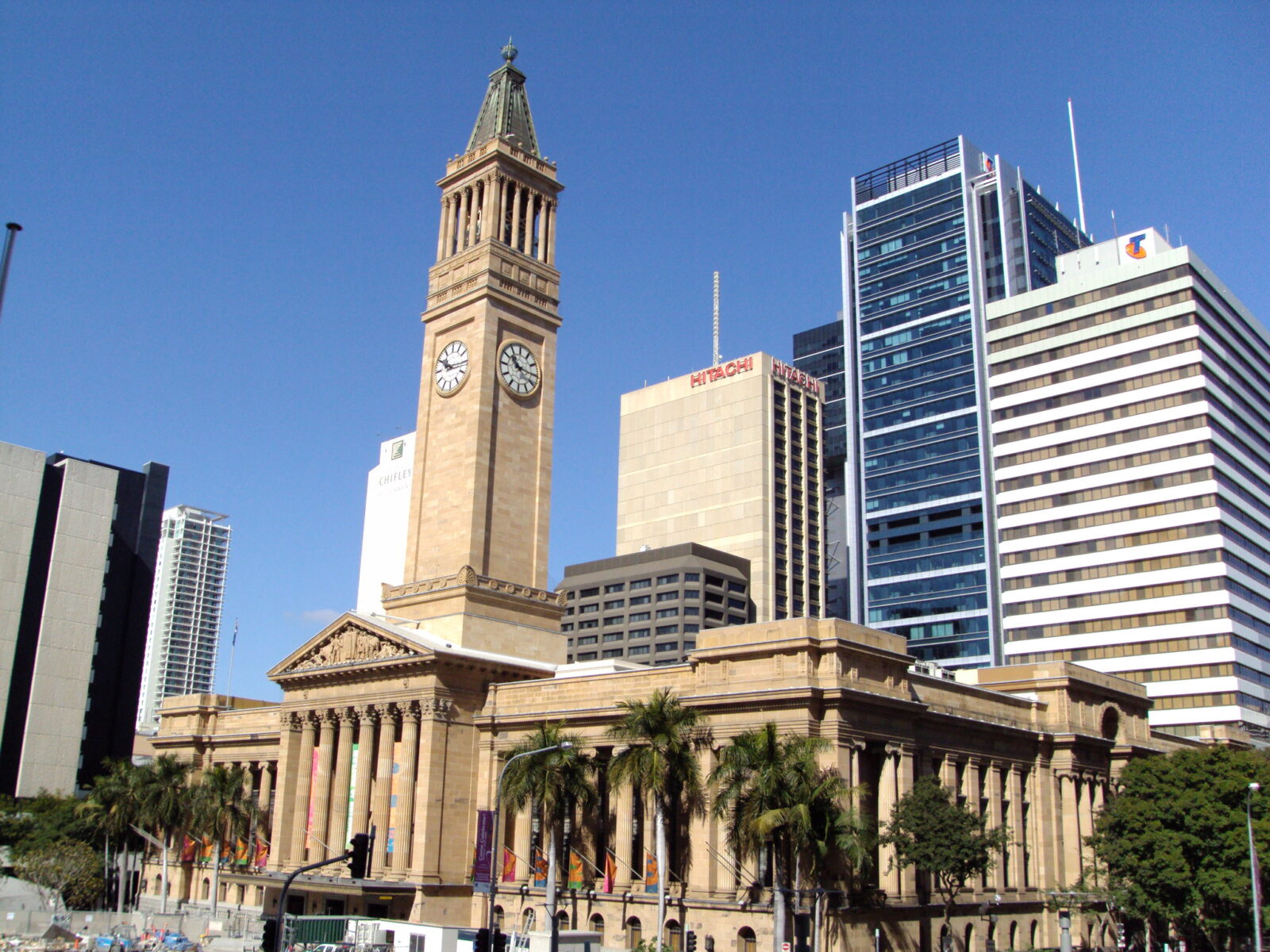
Brisbane City Hall
For visitors seeking a seamless blend of history, culture, and modern amenities, our concierge services can enhance your experience at Brisbane City Hall. Whether you’re interested in guided tours, attending events, or exploring nearby attractions, our concierge services are designed to cater to your needs and ensure a memorable visit. From arranging personalized tours that delve into the building’s rich history to recommending the best dining spots in the area, our team is dedicated to making your visit to Brisbane City Hall as enjoyable and informative as possible.
Brisbane City Hall, located in King George Square, is an iconic landmark and the seat of local government in Brisbane, Queensland, Australia. Completed in 1930, this heritage-listed building is renowned for its striking neo-classical architecture, featuring a prominent clock tower that stands 92 meters tall. The building serves as a symbol of civic pride and has played a significant role in the city’s history, hosting numerous events, ceremonies, and cultural activities. Its impressive main auditorium, ornate reception rooms, and grand marble staircases make it a popular tourist attraction and a cherished venue for both official functions and community gatherings. Brisbane City Hall underwent extensive restoration between 2010 and 2013, preserving its historical significance while modernizing its facilities for continued use in the 21st century.
Brisbane City Hall, an iconic landmark in the heart of Queensland’s capital, is more than just a beautiful example of neo-classical architecture. While its grand facade and impressive clock tower are well-known to locals and visitors alike, this historic building holds a treasure trove of hidden secrets waiting to be discovered by those willing to look beyond the surface.
One of the most intriguing secrets of Brisbane City Hall lies beneath its very foundations. During the construction of the building in the 1920s, workers stumbled upon an underground spring. Rather than viewing this as a setback, the architects ingeniously incorporated the spring into the building’s design. Today, this natural water source still flows beneath the hall, helping to cool the structure during Brisbane’s scorching summer months.
As you step inside the building, you might not realize that you’re walking on a piece of history. The main foyer’s floor is made of exquisite Italian marble, but what many don’t know is that this marble was salvaged from the demolition of the previous Town Hall. This clever recycling not only saved money but also preserved a tangible link to the city’s past.
Moving up to the main auditorium, keen-eyed visitors might spot an unusual feature in the ceiling. Hidden among the ornate plasterwork are several small trapdoors. These were originally designed to allow technicians to access the lighting and sound equipment without disturbing events below. Today, they serve as a reminder of the building’s adaptability over the years.
One of the most fascinating hidden features of Brisbane City Hall is its network of secret tunnels. These passageways, which run beneath the building and connect to nearby structures, were originally built for practical purposes such as deliveries and maintenance. However, during World War II, they took on a more crucial role as potential air raid shelters. While no longer in regular use, these tunnels still exist and continue to fuel the imaginations of history buffs and urban explorers.
The clock tower, a defining feature of Brisbane’s skyline, has its own secrets to share. While many know about the observation deck at the top, few are aware of the intricate mechanism that keeps the clock running. Hidden behind the clock faces is a complex system of gears and weights that has been faithfully marking time for nearly a century. Even more surprising is the fact that the clock’s chimes are not produced by actual bells, but by a sophisticated electronic system installed in the 1980s.
For those with a keen ear, the City Hall’s pipe organ holds another secret. This magnificent instrument, one of the largest of its kind in Australia, contains several “dummy pipes” that serve no musical function. These were added purely for aesthetic reasons, to maintain the organ’s symmetrical appearance.
Perhaps one of the most charming hidden features of Brisbane City Hall is its rooftop beehives. Installed as part of a sustainability initiative, these hives are home to thousands of bees that produce honey used in the building’s kitchen. This secret garden in the sky not only contributes to urban biodiversity but also provides a sweet taste of Brisbane to visitors lucky enough to sample its produce.
As you explore Brisbane City Hall, keep in mind that every corner, every room, and even the spaces between the walls could be hiding a fascinating secret. This grand old building continues to surprise and delight, proving that even after nearly a century, it still has plenty of stories to tell for those willing to seek them out.Brisbane City Hall stands as an iconic symbol of the city’s history and civic pride. Completed in 1930, this heritage-listed building showcases impressive Italianate architecture and serves as a focal point for local government and community events. Its clock tower, museum, and grand auditorium continue to attract visitors and residents alike. Despite undergoing extensive renovations, City Hall has maintained its historical significance while adapting to modern needs. As a cultural and administrative hub, Brisbane City Hall remains an enduring testament to the city’s growth and development over the past century.